
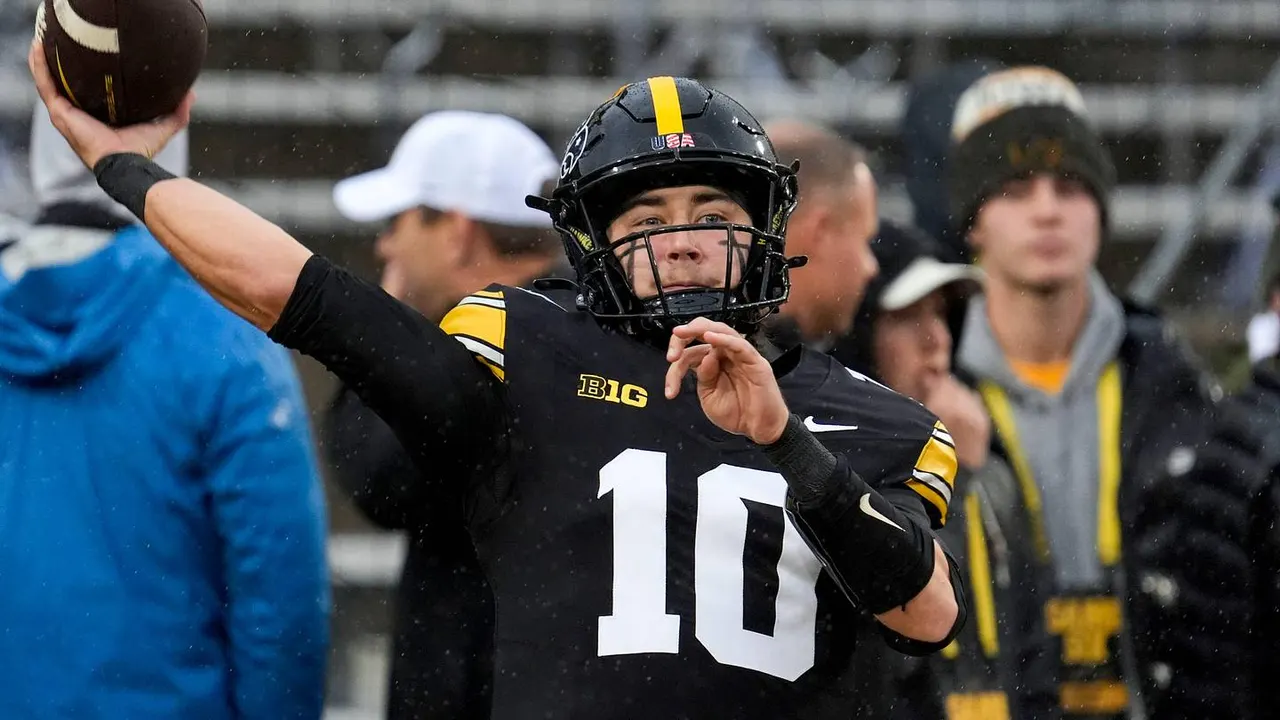
For generations, men have been encouraged to suffer in silence.
To bury their feelings. To disguise their needs beneath layers of stoicism and emotional restraint. To expect those around them to understand what they want without ever having the courage to say it aloud.
On Friday night in Seattle, Jeremy Hecklinski decided he had had enough.
Hecklinski, a young man visiting from Iowa, found himself in an increasingly frustrating encounter with several strangers who appeared unwilling to accommodate a relatively simple request.
He had approached the situation with patience. He had observed the accepted social conventions. He had given the men opposite him every reasonable opportunity to anticipate his needs.
Nothing.
There comes a point in every man's life when he must decide whether to continue swallowing his frustrations or risk the vulnerability of being understood.
For Hecklinski, that moment arrived in front of approximately 70,000 people at Husky Stadium.
Men are rarely taught to communicate directly. Instead, they are encouraged to rely upon signals, gestures, and the quiet hope that someone might eventually notice their distress. When those signals fail, resentment accumulates. Relationships deteriorate. A simple misunderstanding can become an insurmountable emotional distance.
Hecklinski chose another path.
He recognized that the people around him could not be expected to meet needs he had never explicitly articulated. And so, abandoning the familiar protections of ambiguity and restraint, he found his voice.
It was not an especially gentle voice.
But personal growth seldom arrives in the form we expect.
The young quarterback's experience offers a useful reminder that emotional honesty does not guarantee cooperation. Other people have boundaries. They have priorities and obligations of their own. They may hear our requests perfectly clearly and elect, for reasons entirely unrelated to us, not to comply.
That does not invalidate the courage it took to ask.
Washington's defenders did not provide the response Hecklinski had hoped for. His efforts to establish a more transparent relationship were met with a conspicuous lack of movement.
And yet something important had changed.
For one brief moment, a young man from Iowa stopped expecting the world to read his mind.
He told it what he wanted.
And whatever happened next, nobody could accuse Jeremy Hecklinski of failing to communicate.
Watch the original clip on X →
 Brief
The Comments
0 ON THE RECORDPredictions and premature victory laps may inspire future coverage.